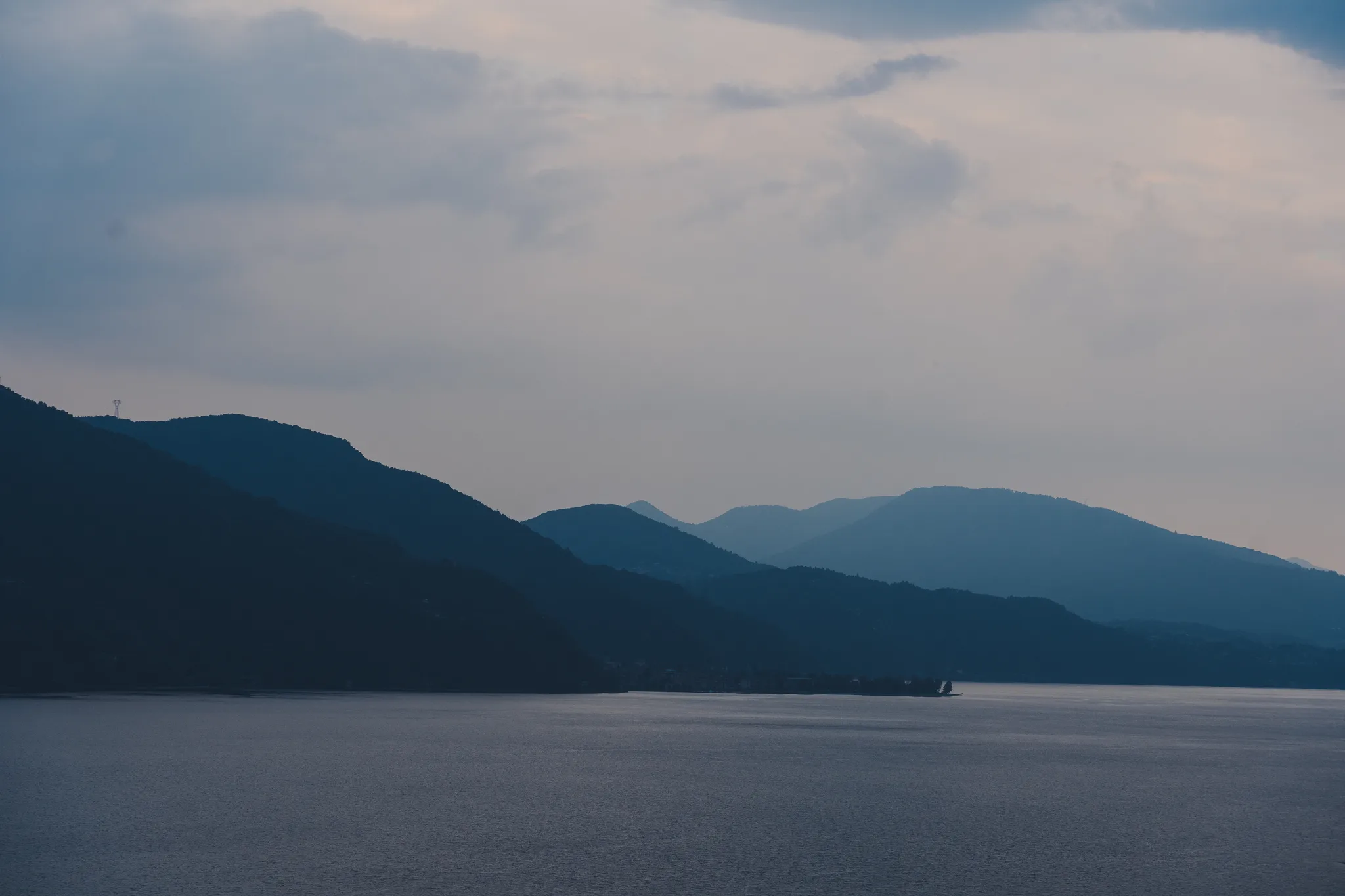
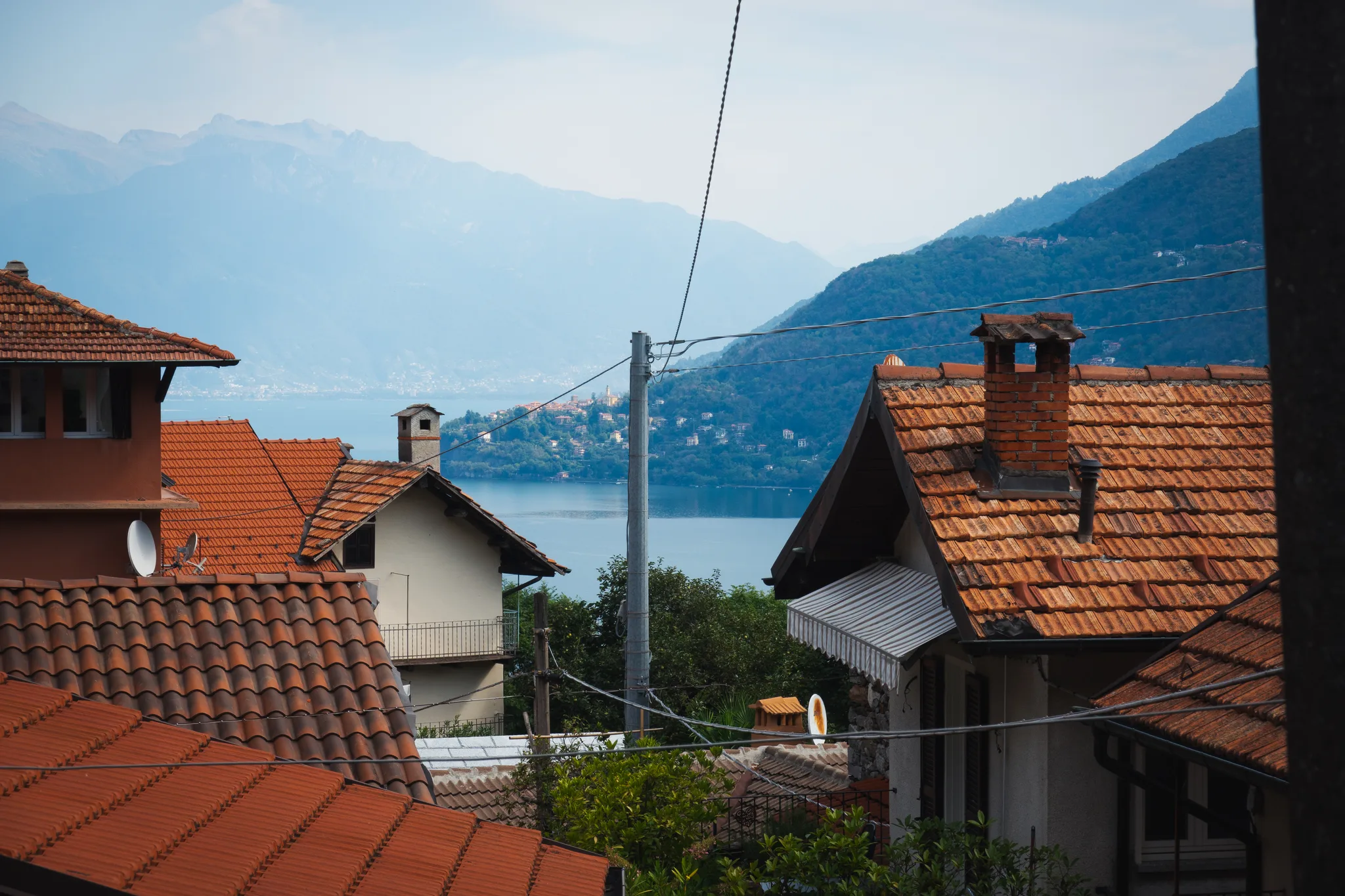
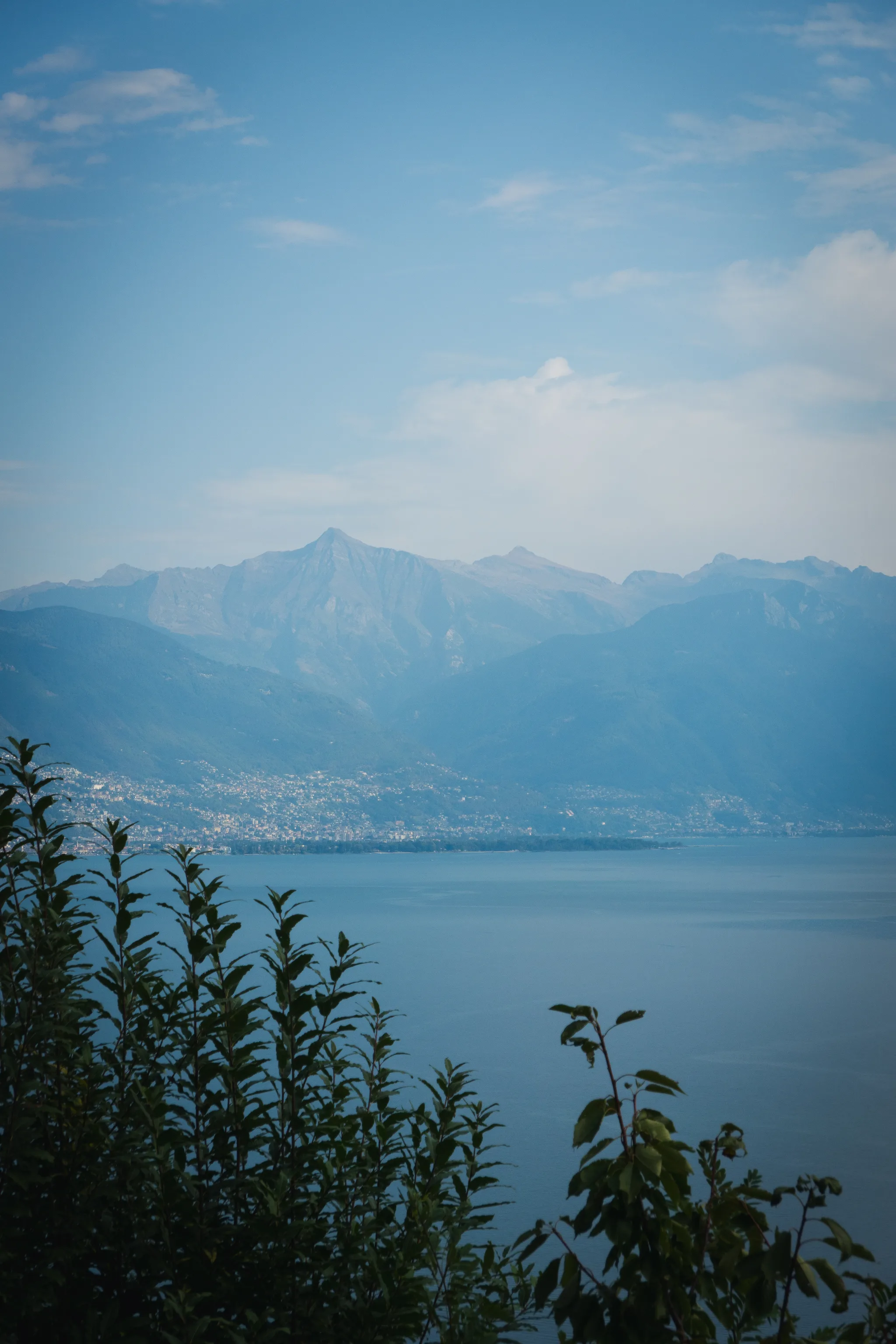
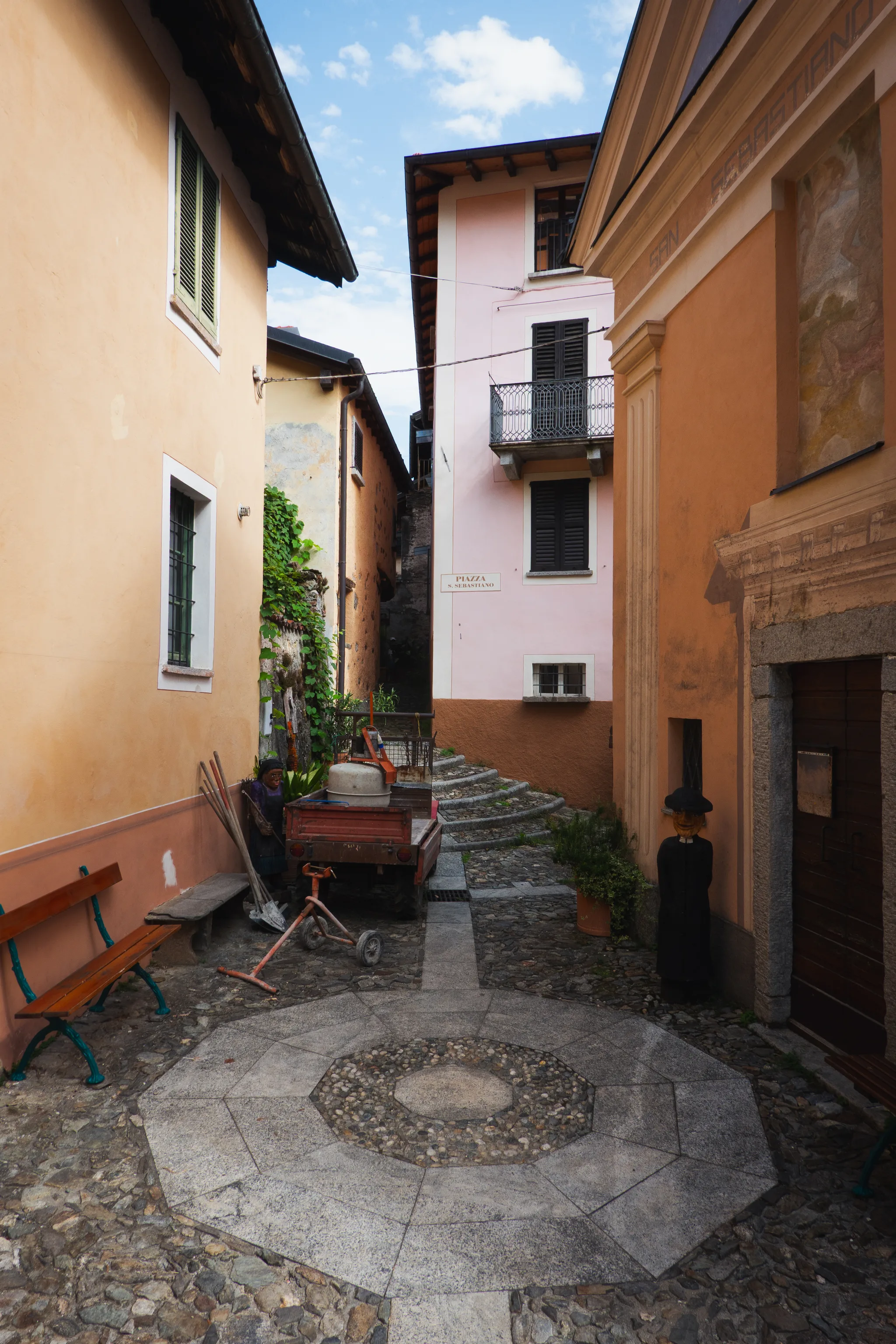
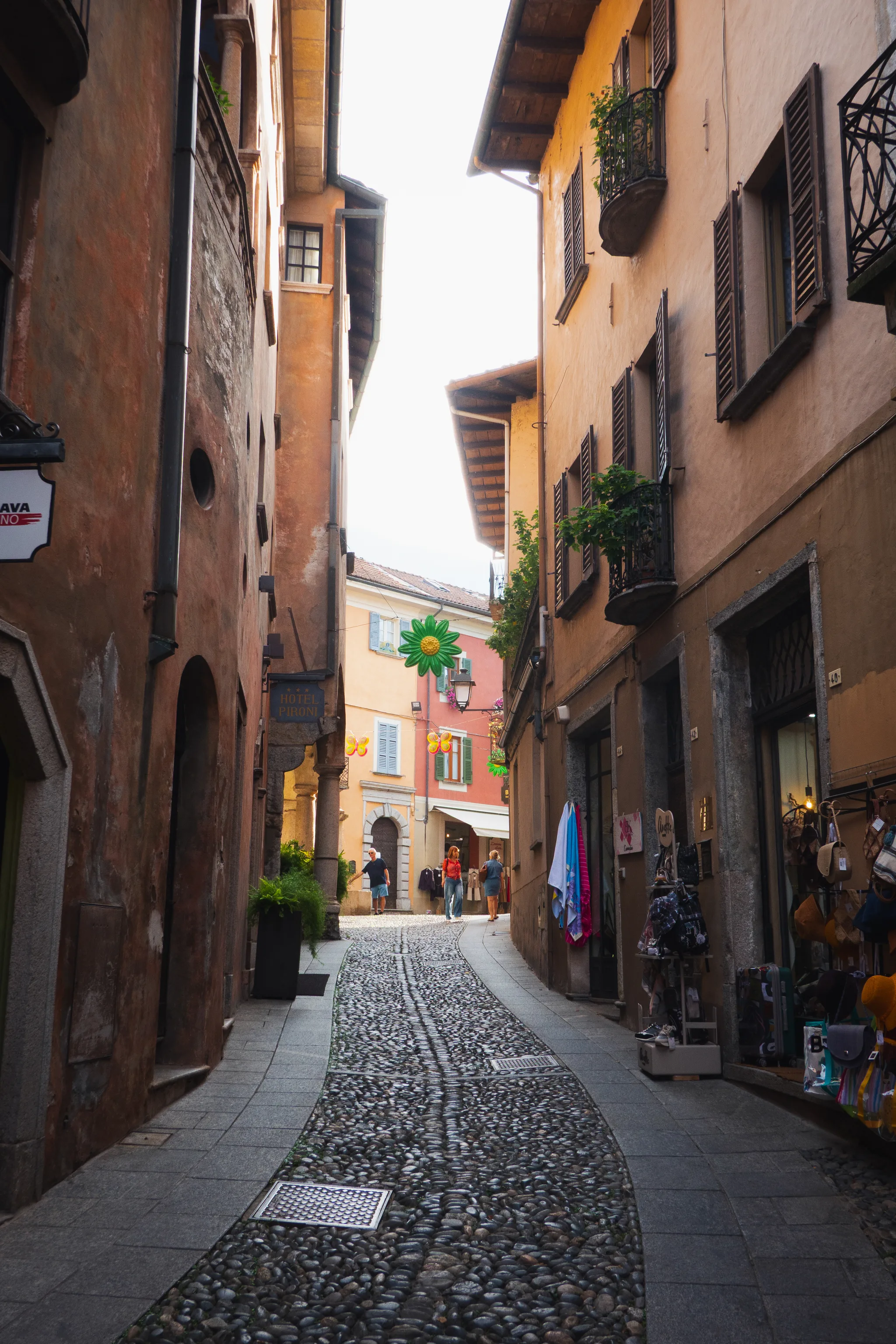
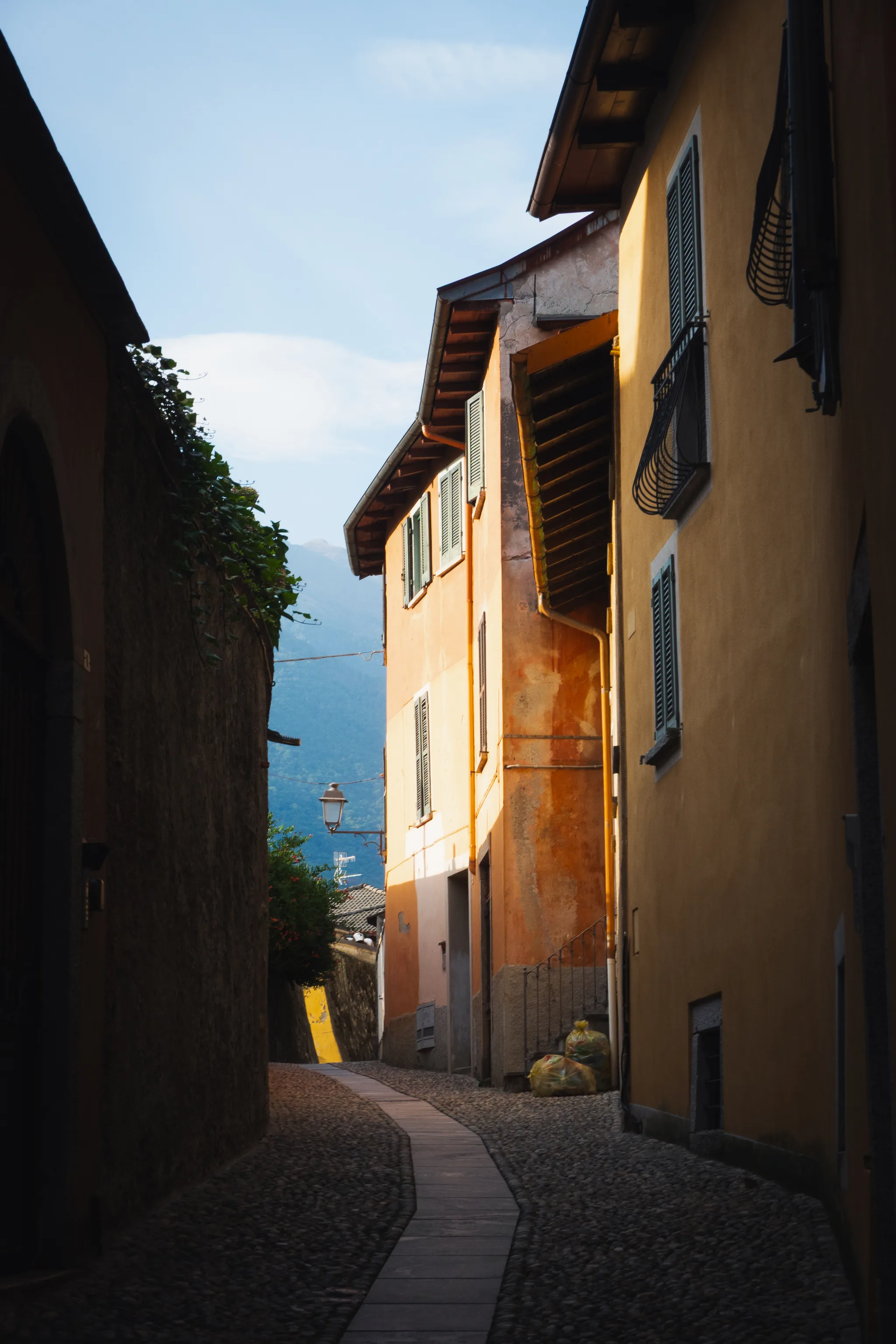
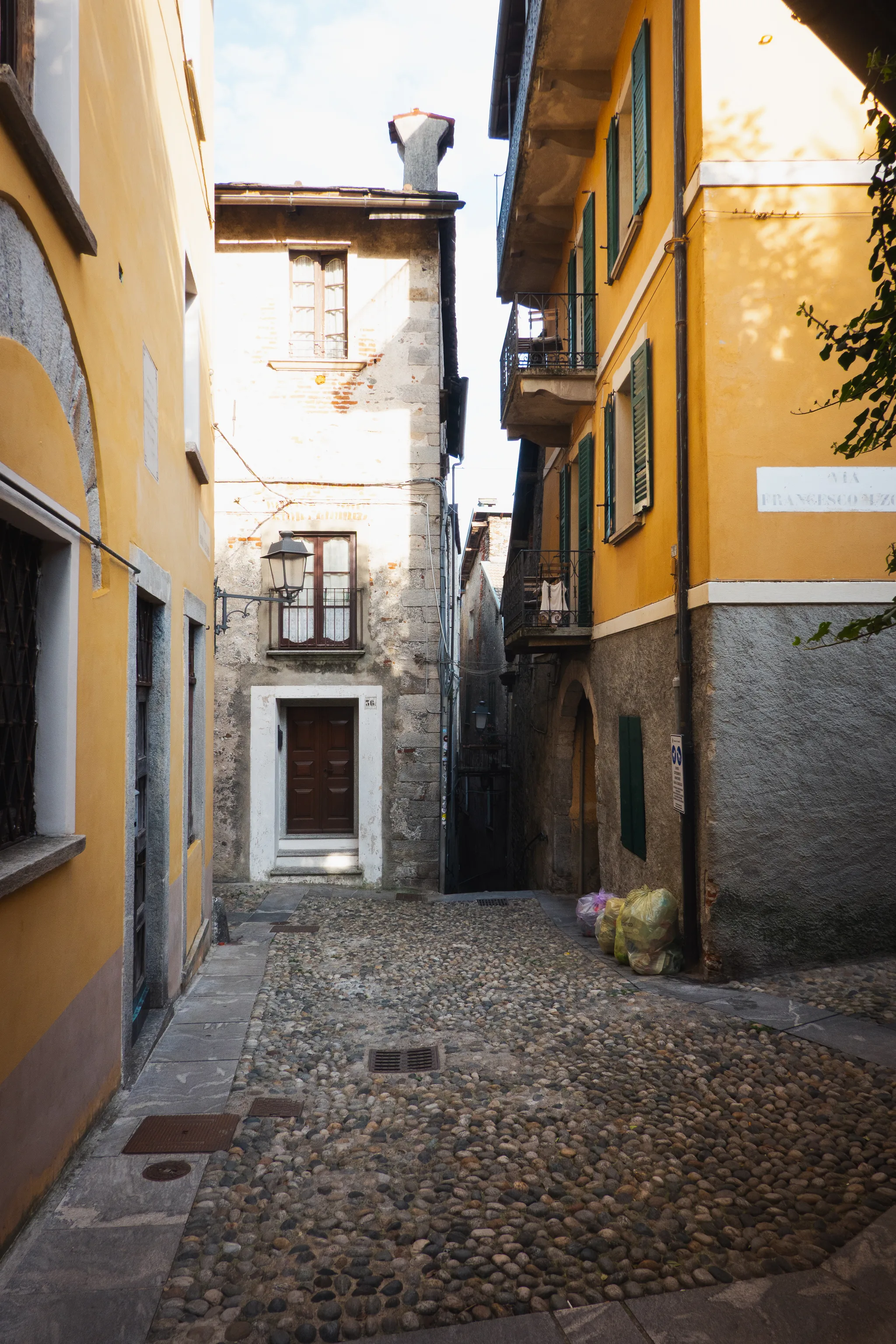
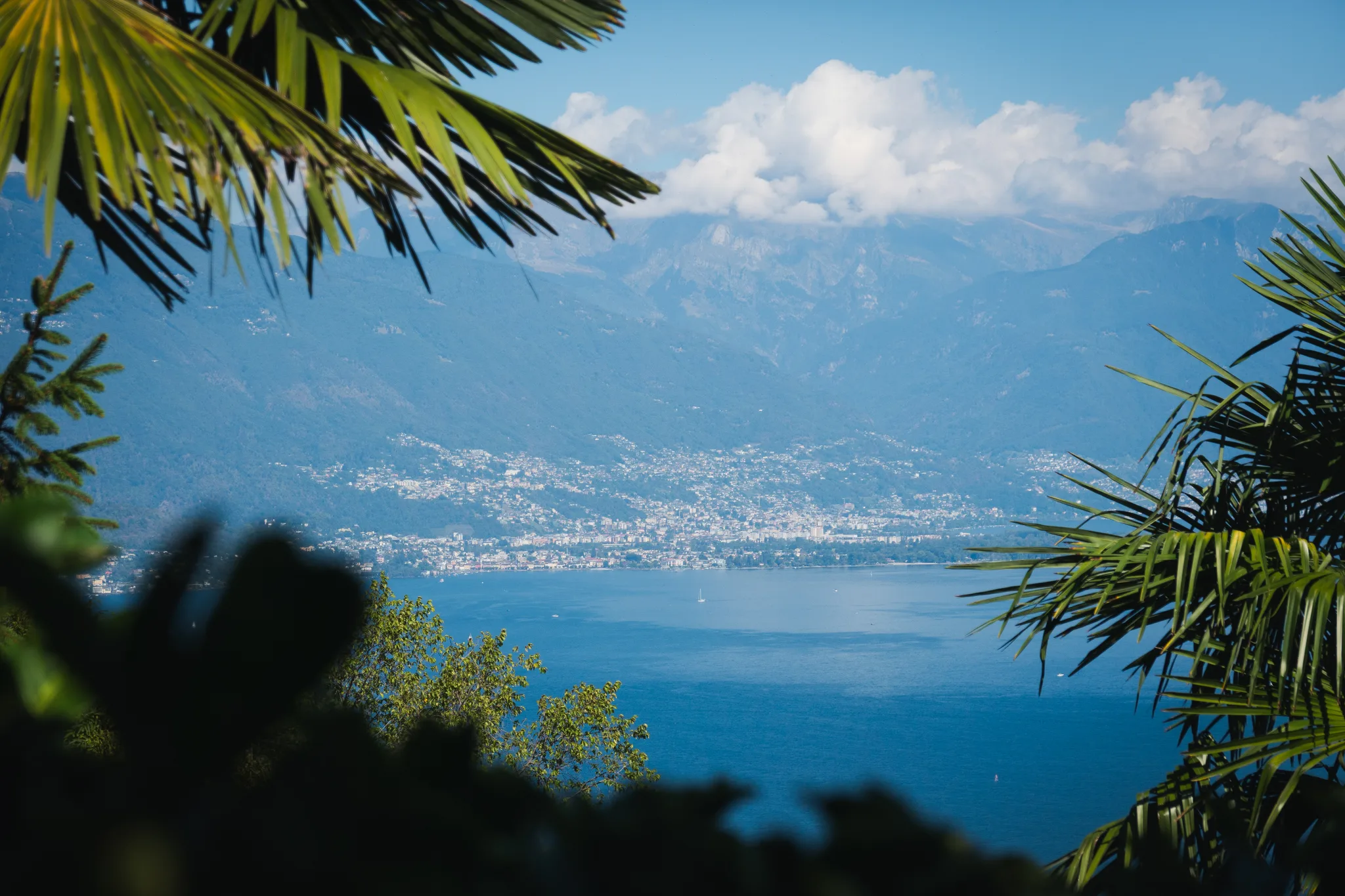
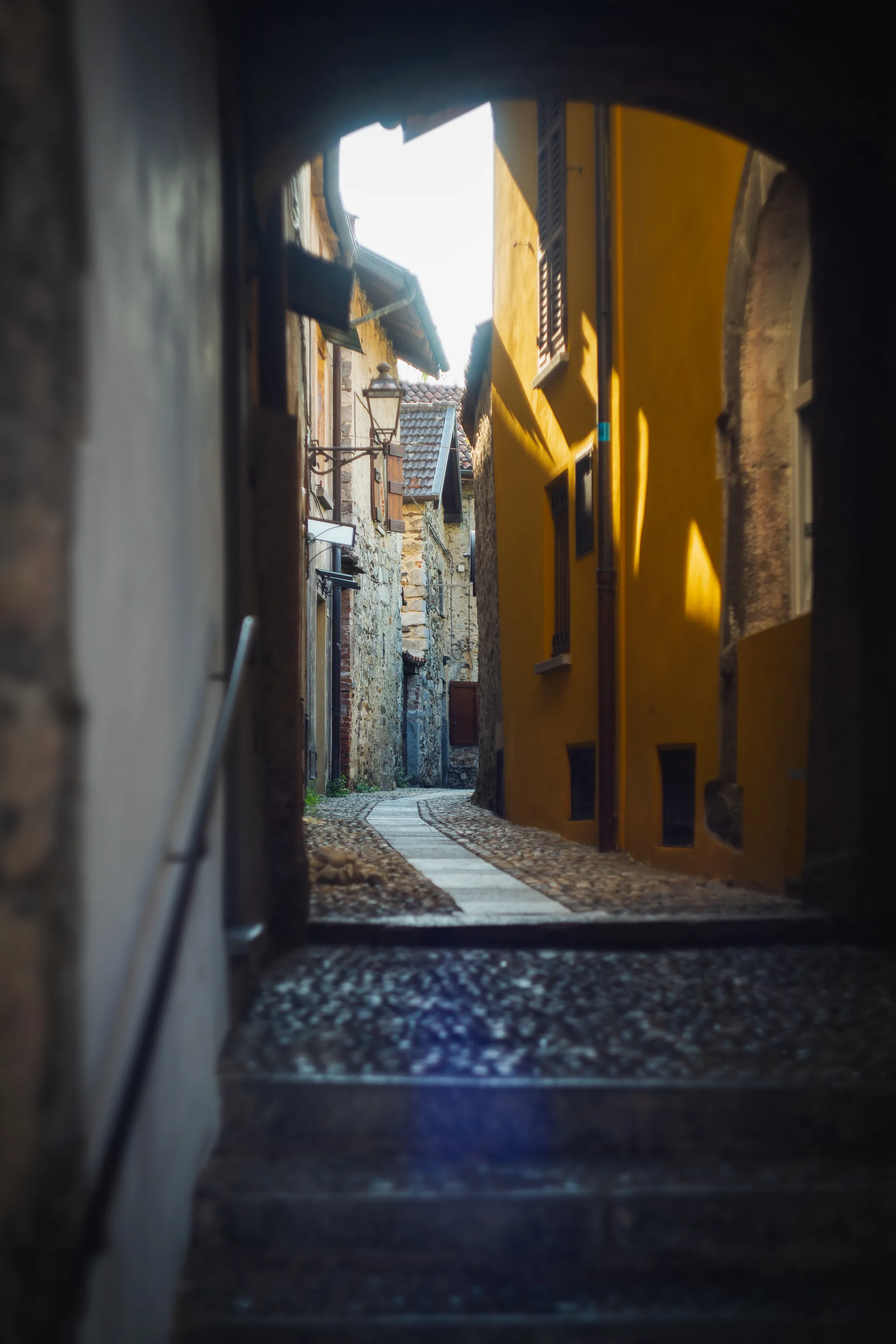
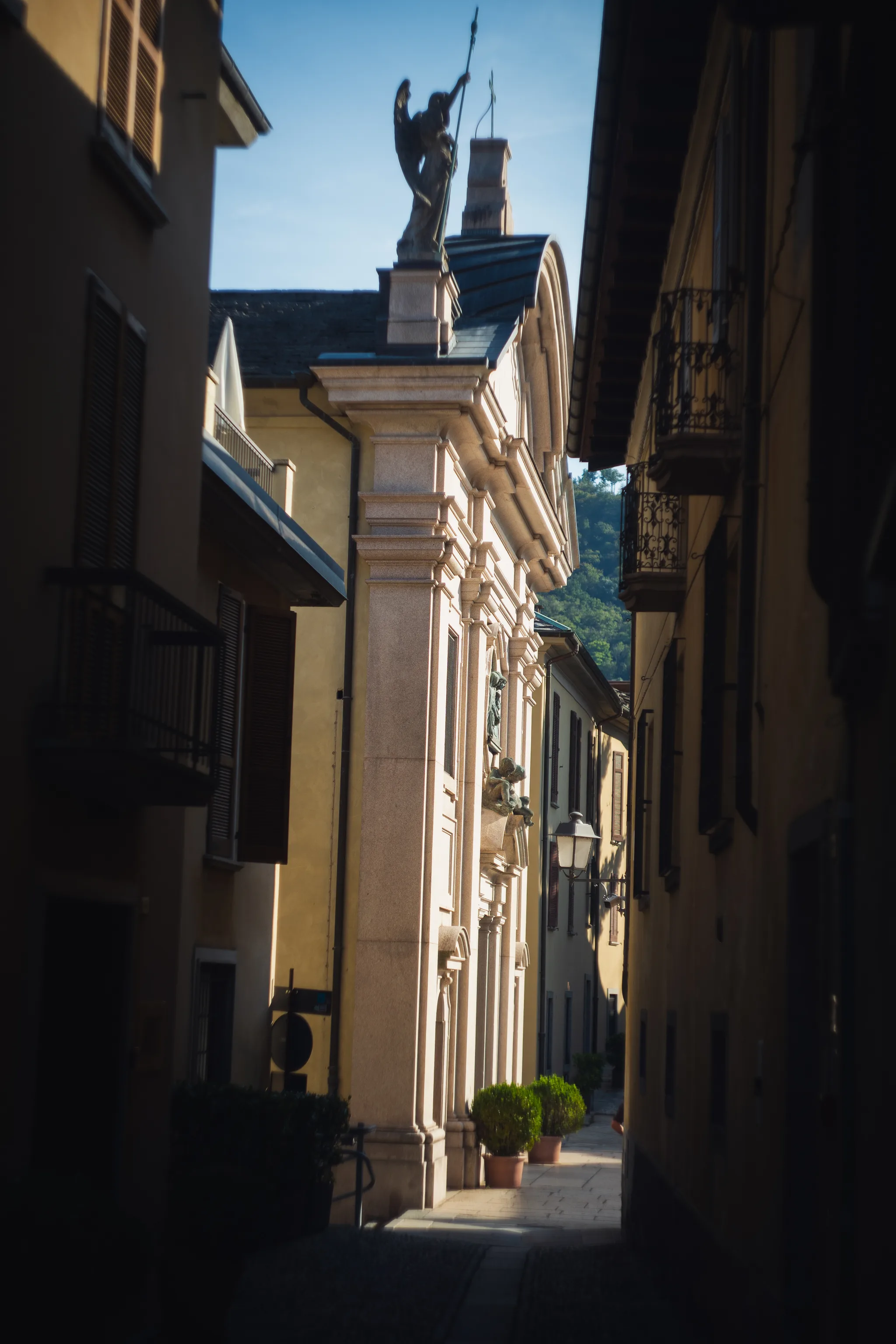
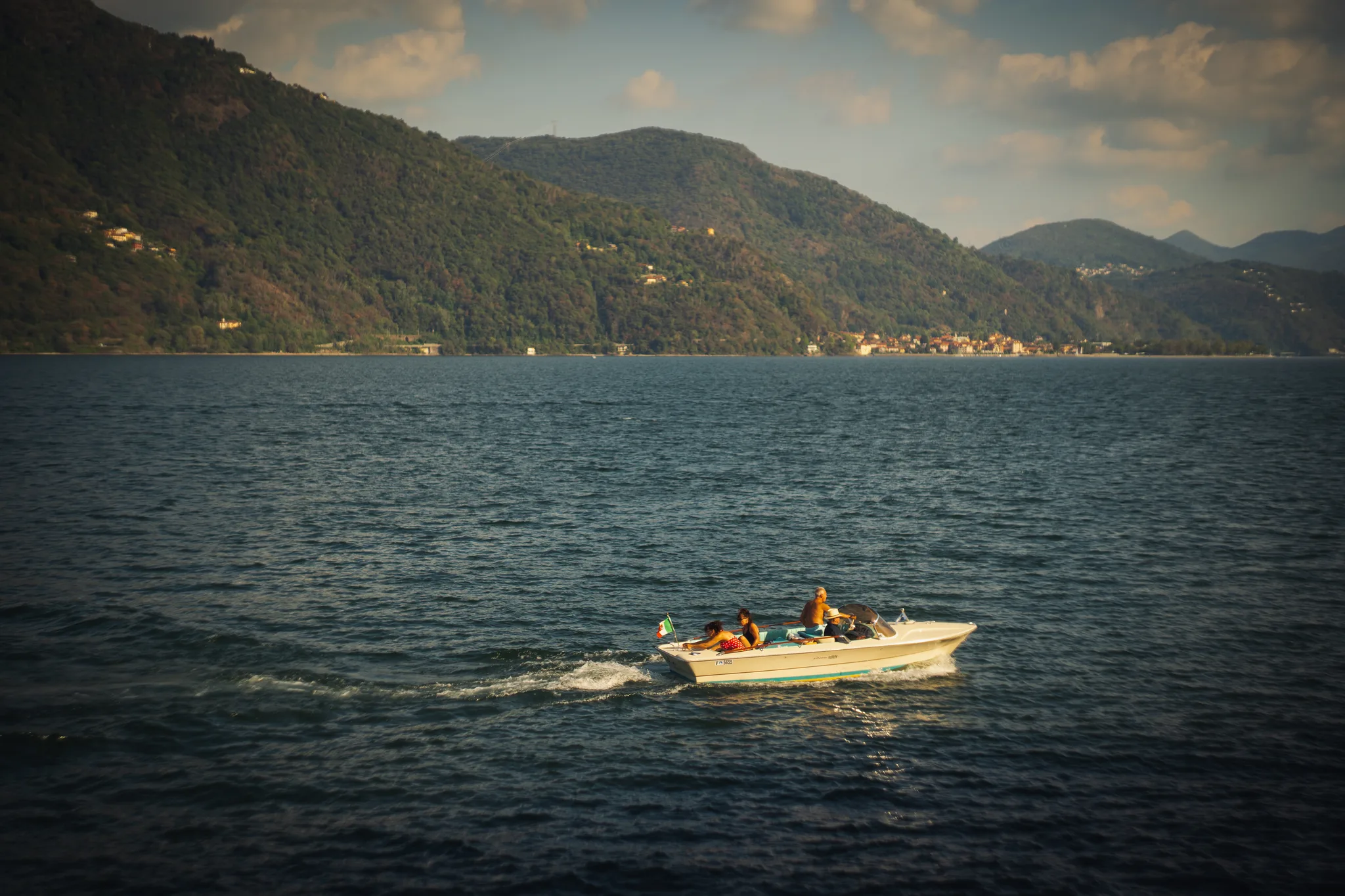
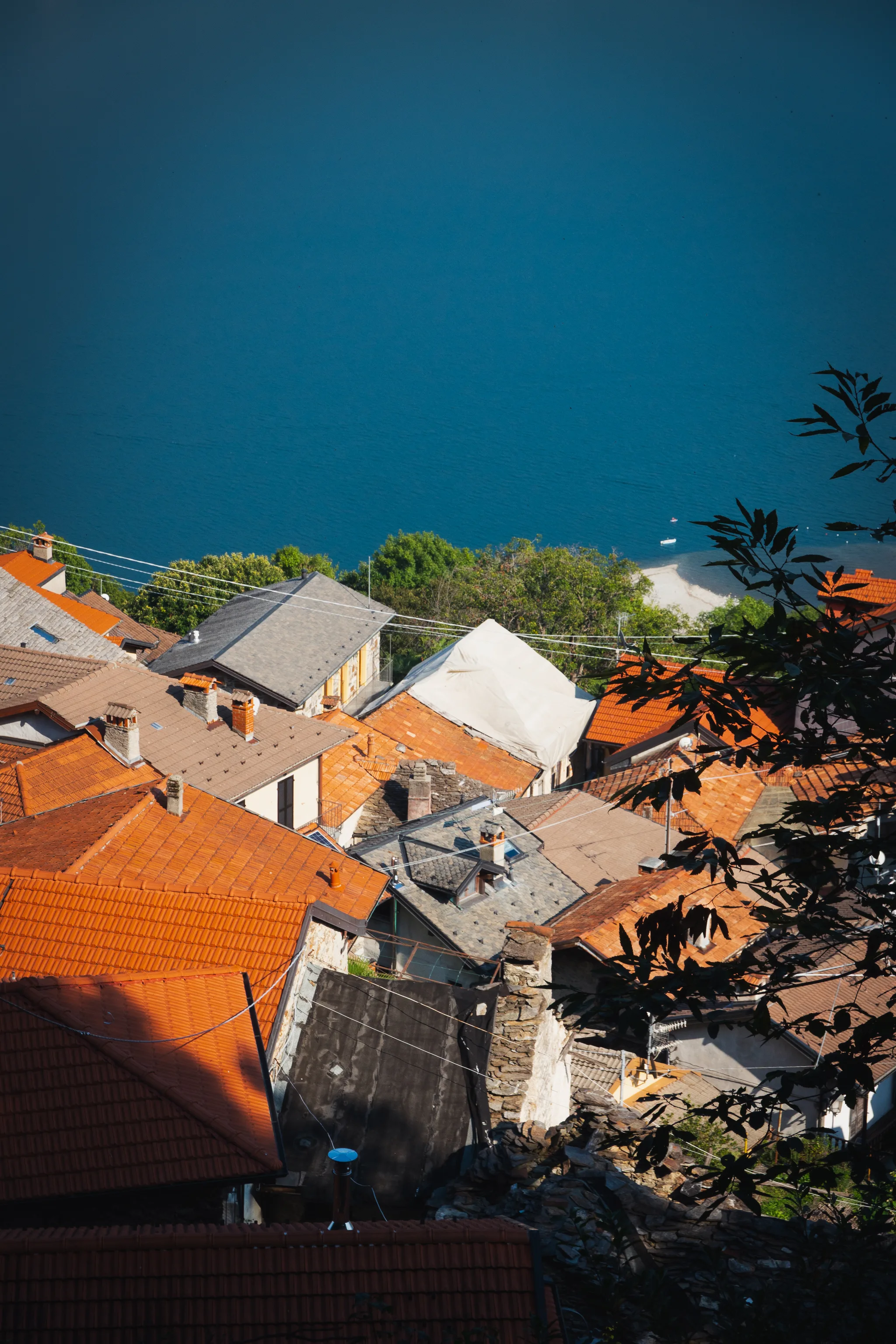
Early September on Lago Maggiore, around Cannobio on the Piedmont shore, a few kilometres short of the Swiss border. Less concrete than usual: terracotta roofs, cobbled lanes, and a lake that changes colour by the hour.
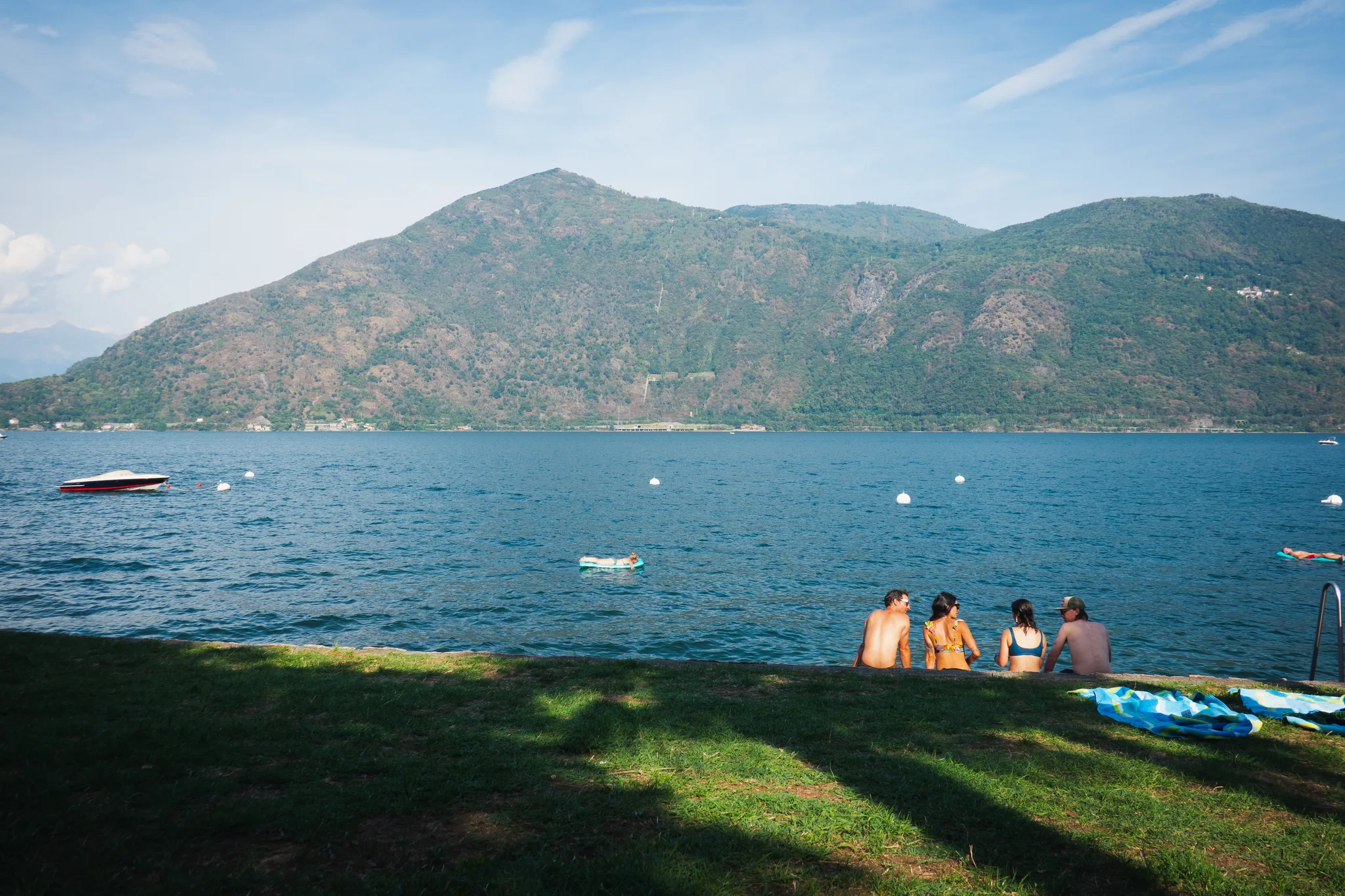
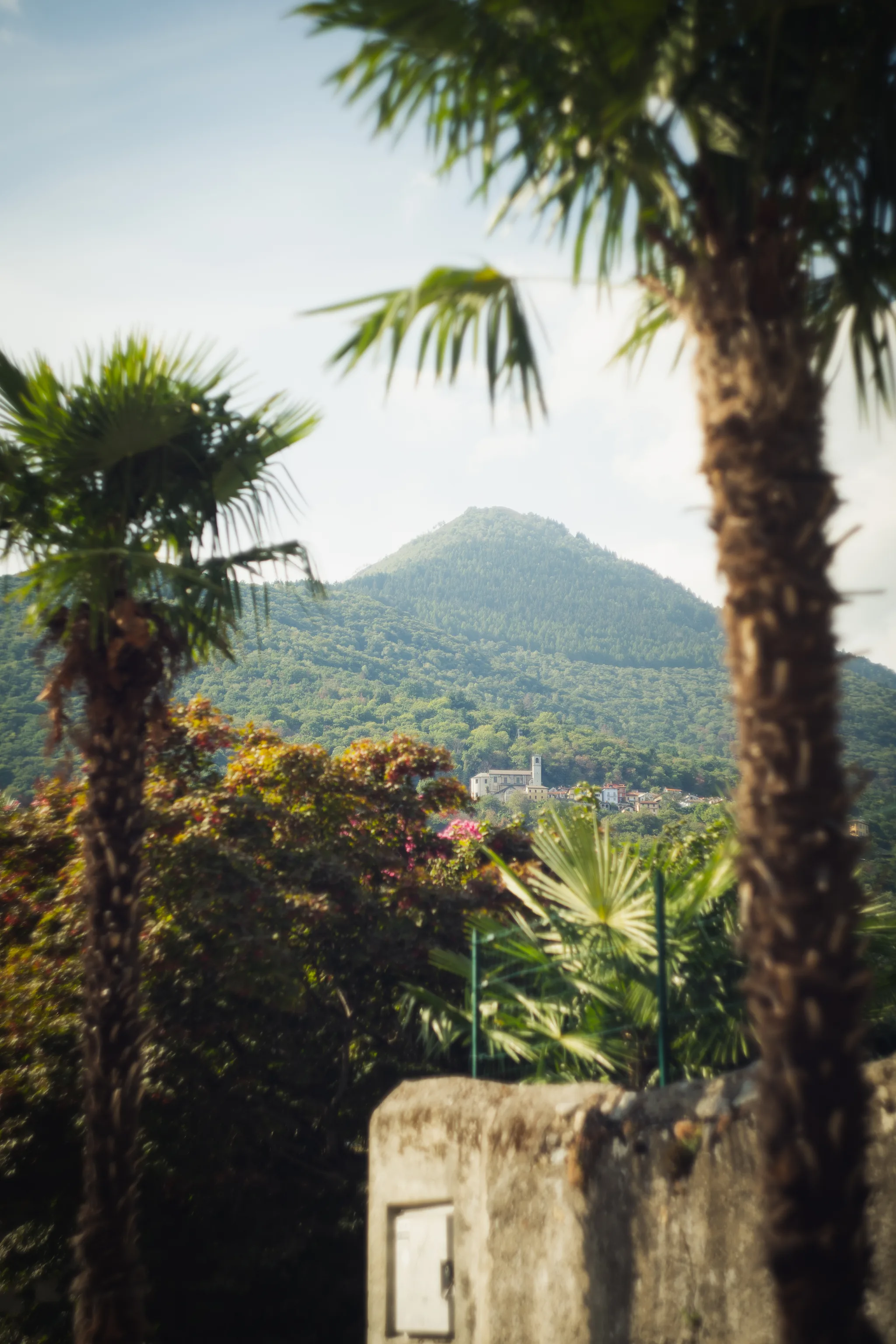
The lake is about 212 km² and 372 m at its deepest, a basin carved out by Ice Age glaciers. Roughly a fifth of it is Swiss, the rest Italian. The water keeps the shore mild enough for palms and camellias, which looks slightly wrong with the Alps right behind them.
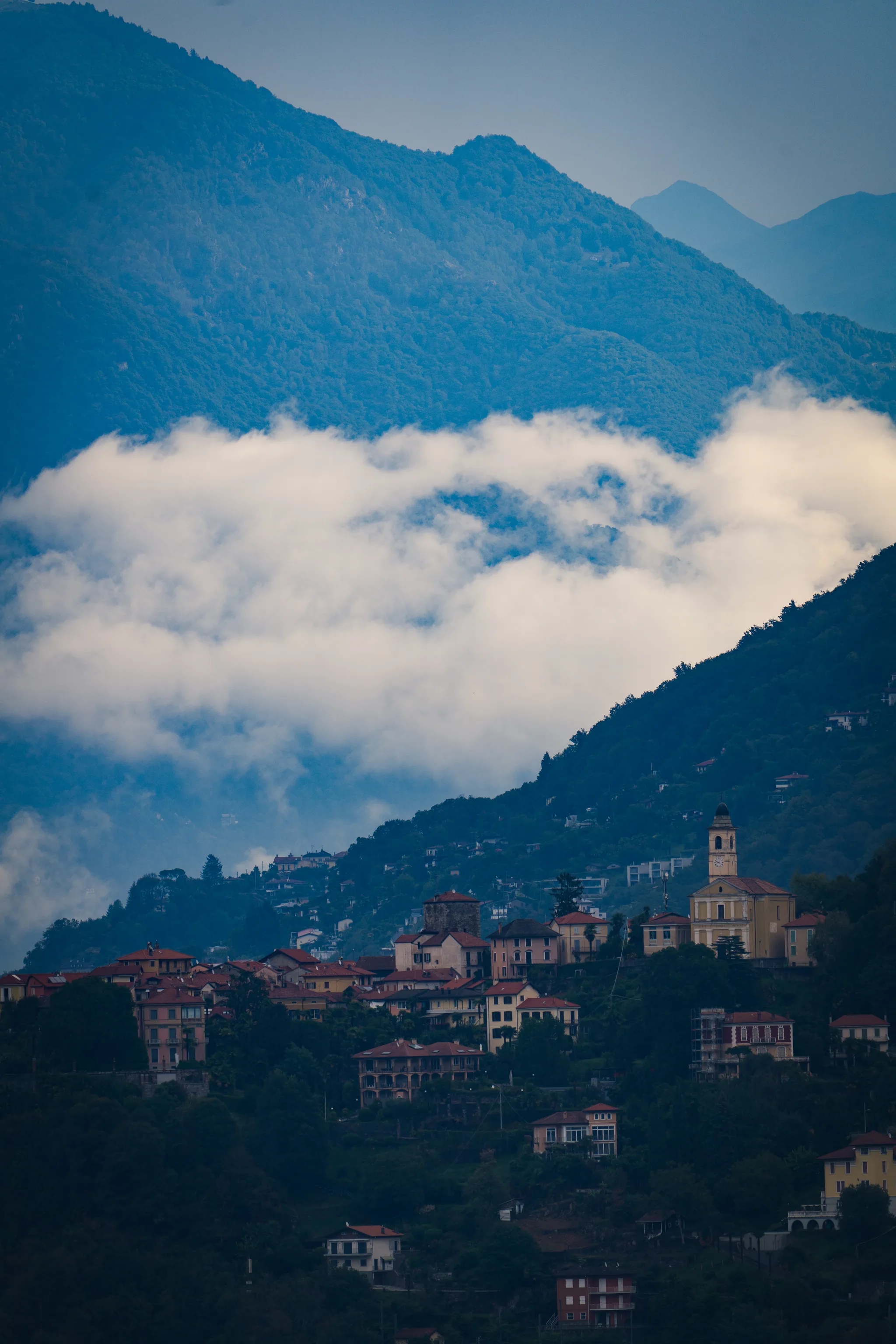
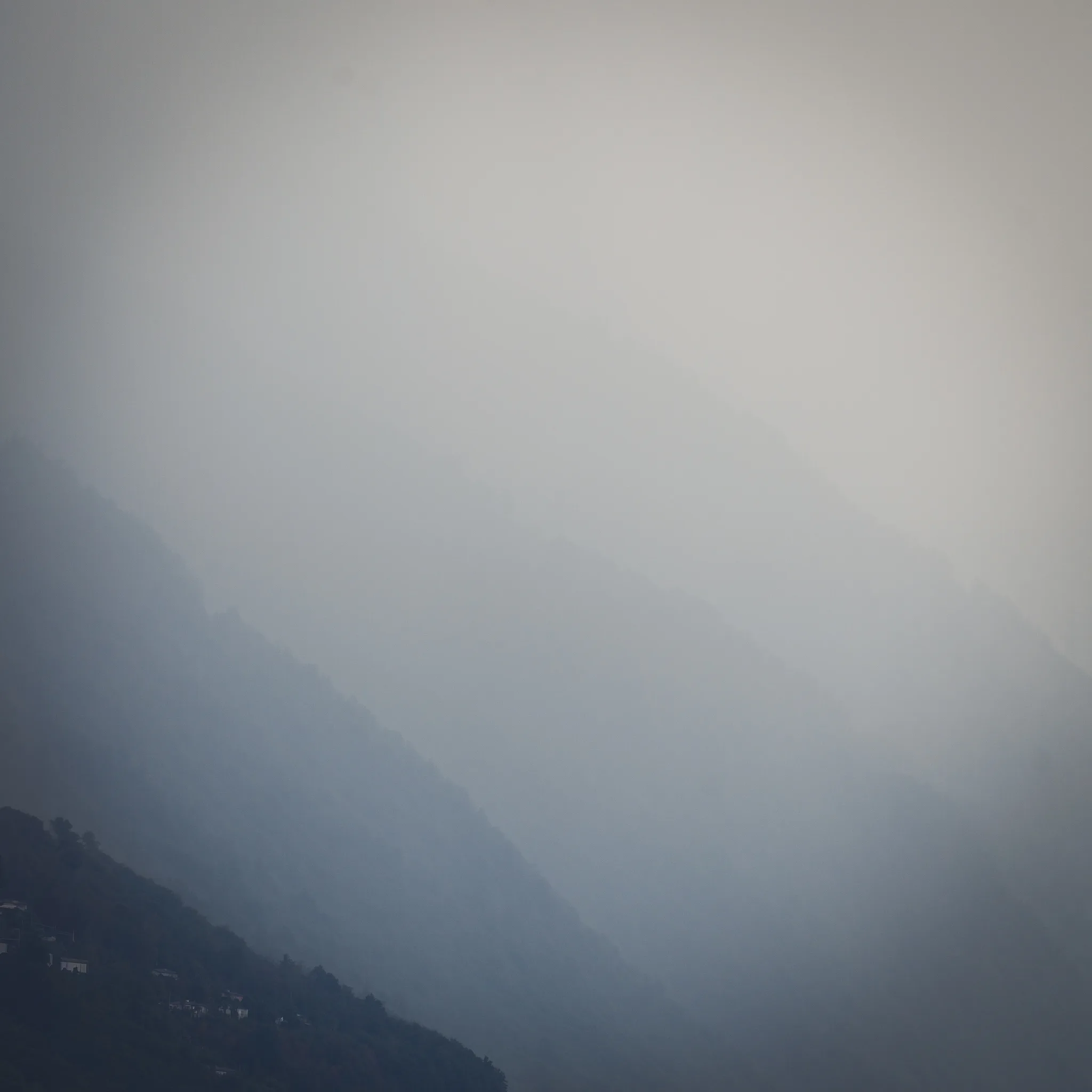
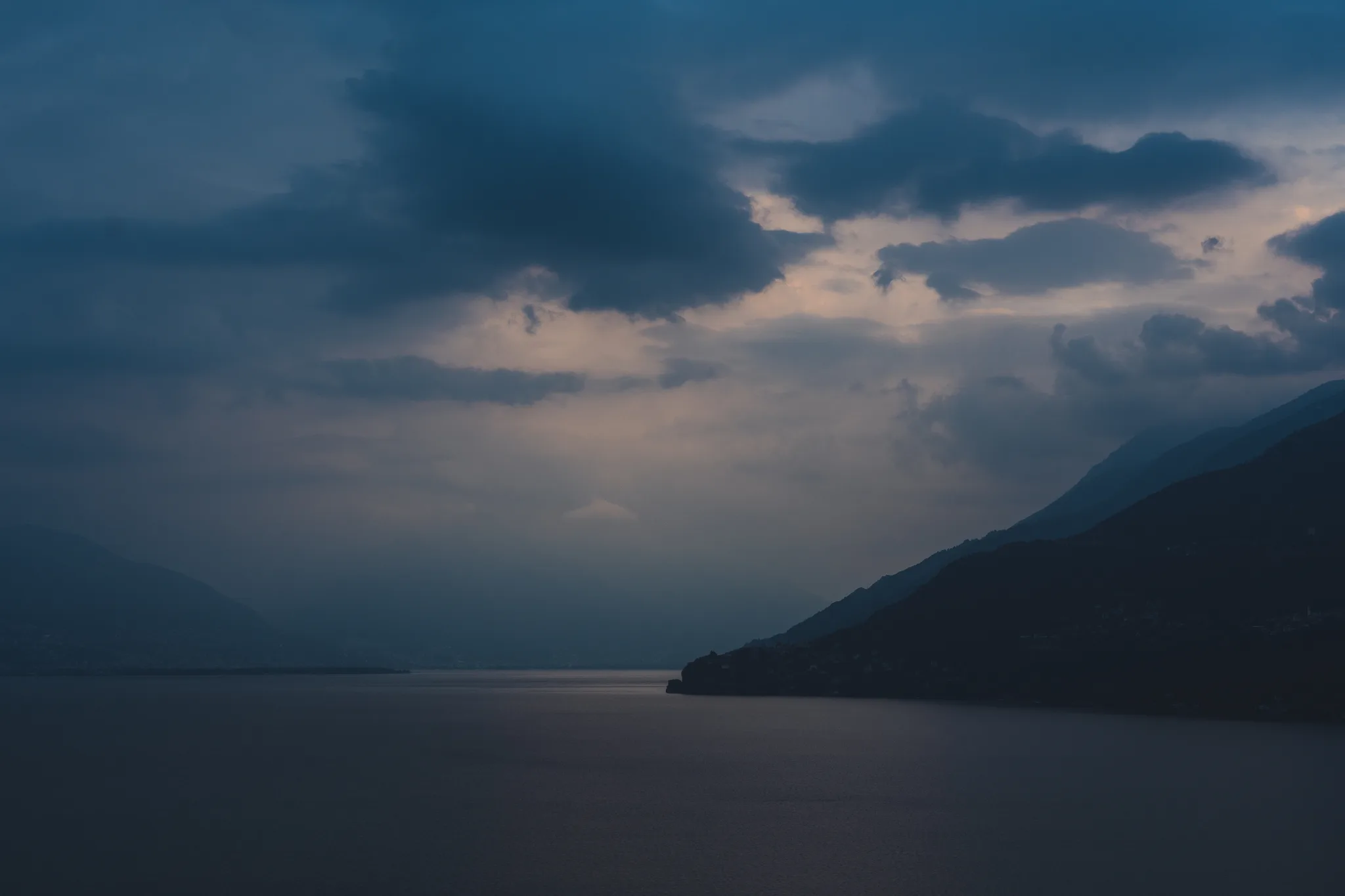
Then the weather turned. For two days the clouds lay down on the slopes, and rain curtains moved across the flat delta at the northern end of the lake, where the Maggia has pushed Locarno and Ascona out into the water.
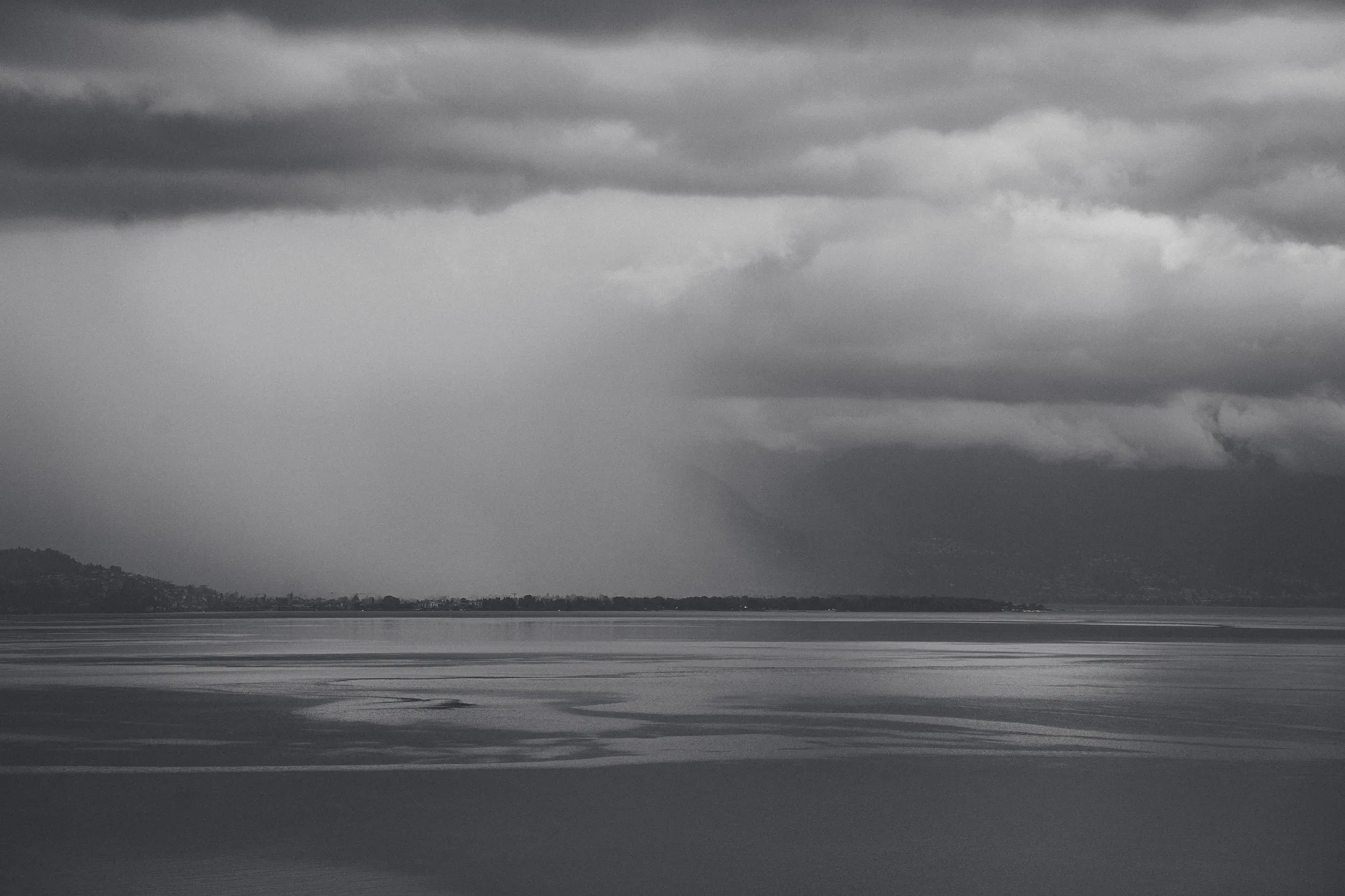
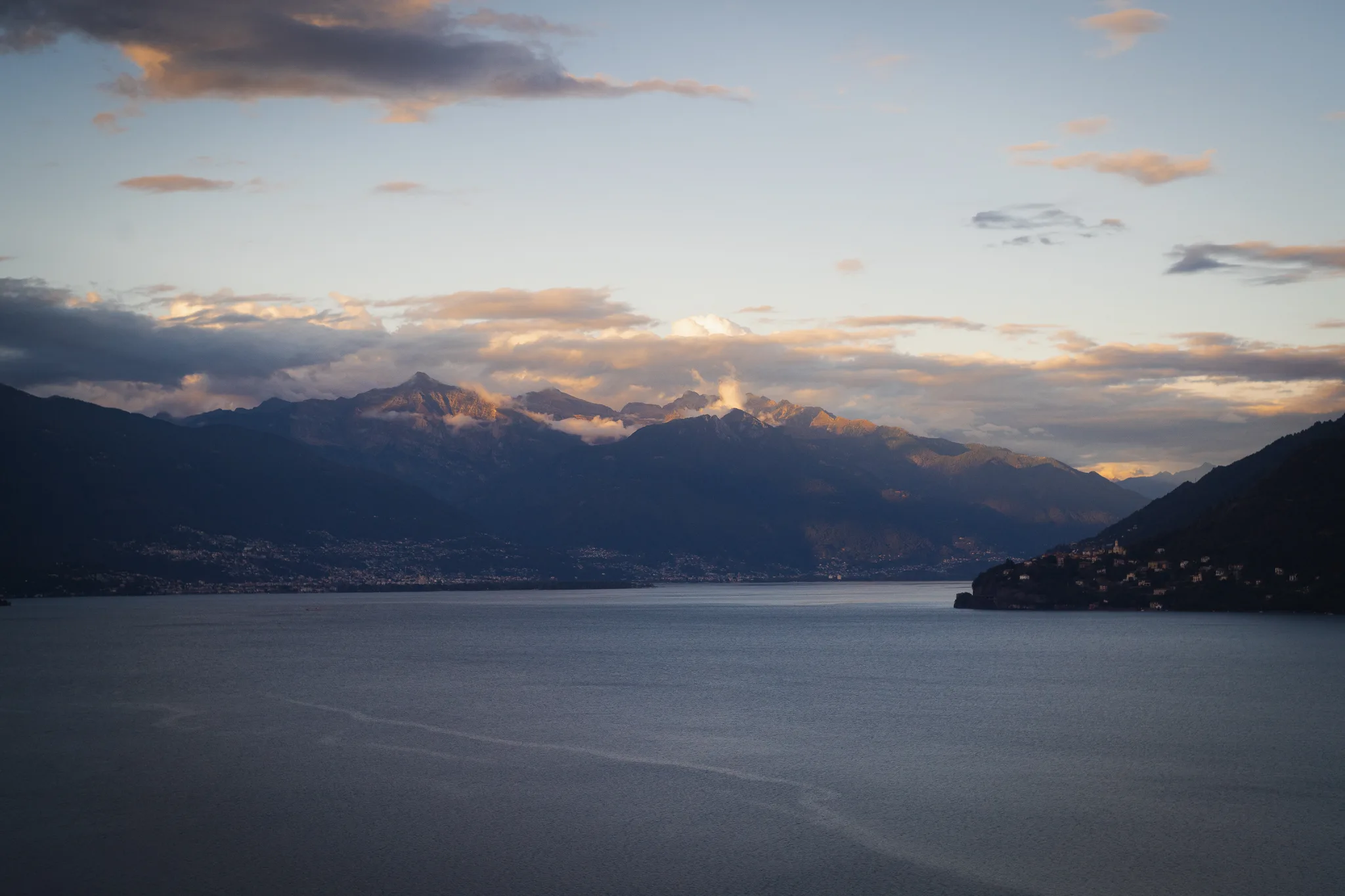
When it cleared, the evenings were worth staying in for: last light on the peaks above Locarno, across the water. In 1925 the Locarno Treaties were negotiated there, and the "spirit of Locarno" that followed didn't make it far into the 1930s.
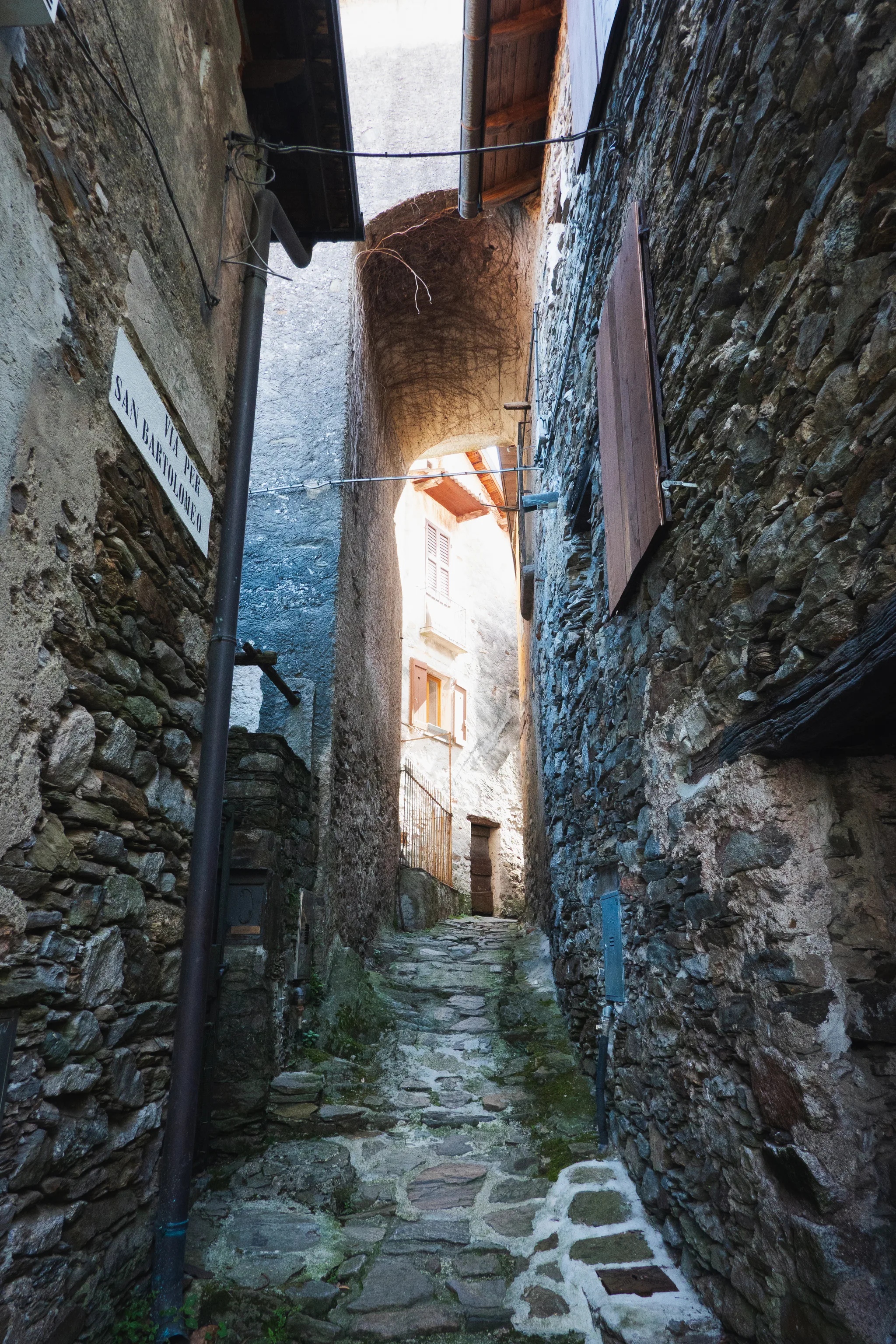
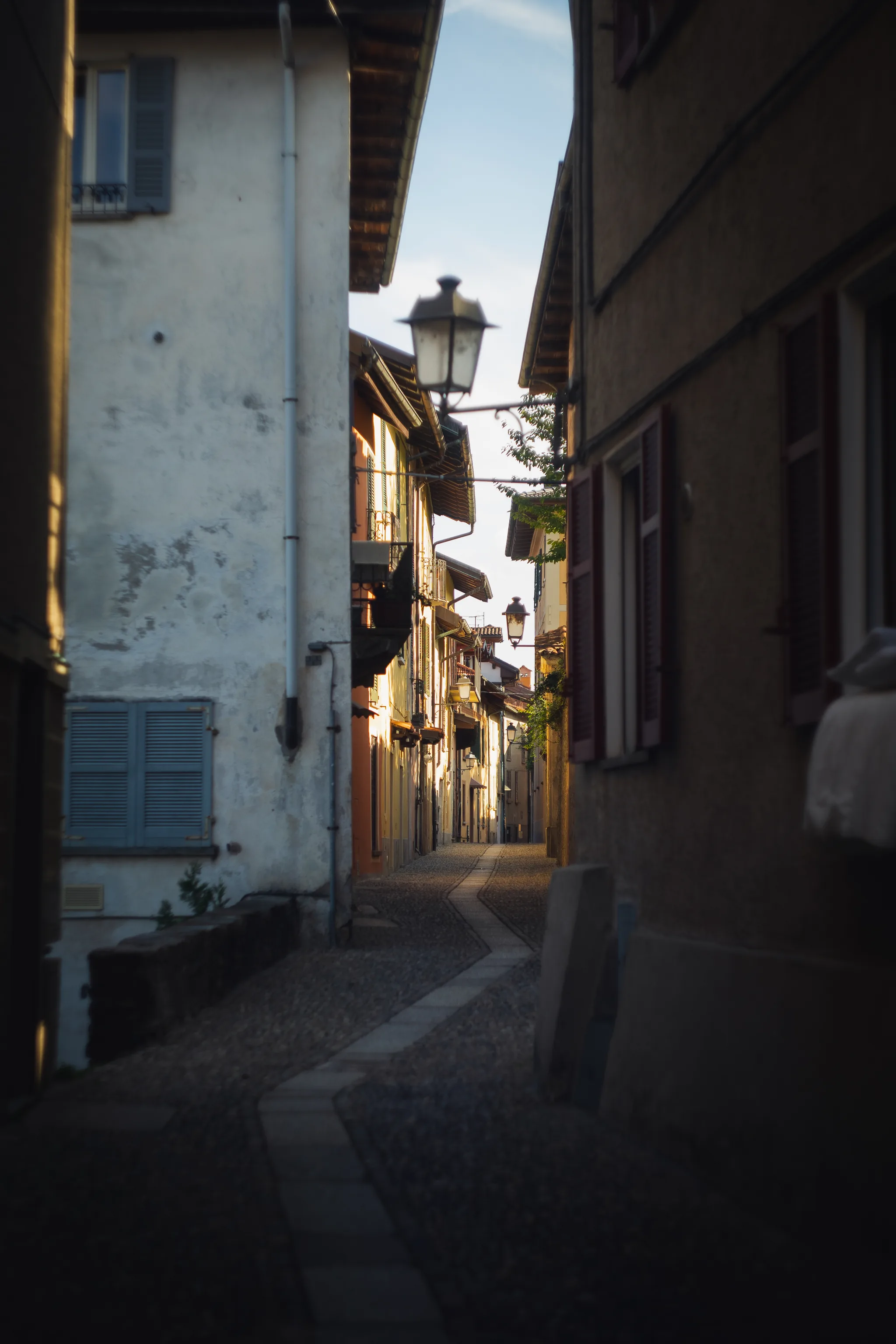
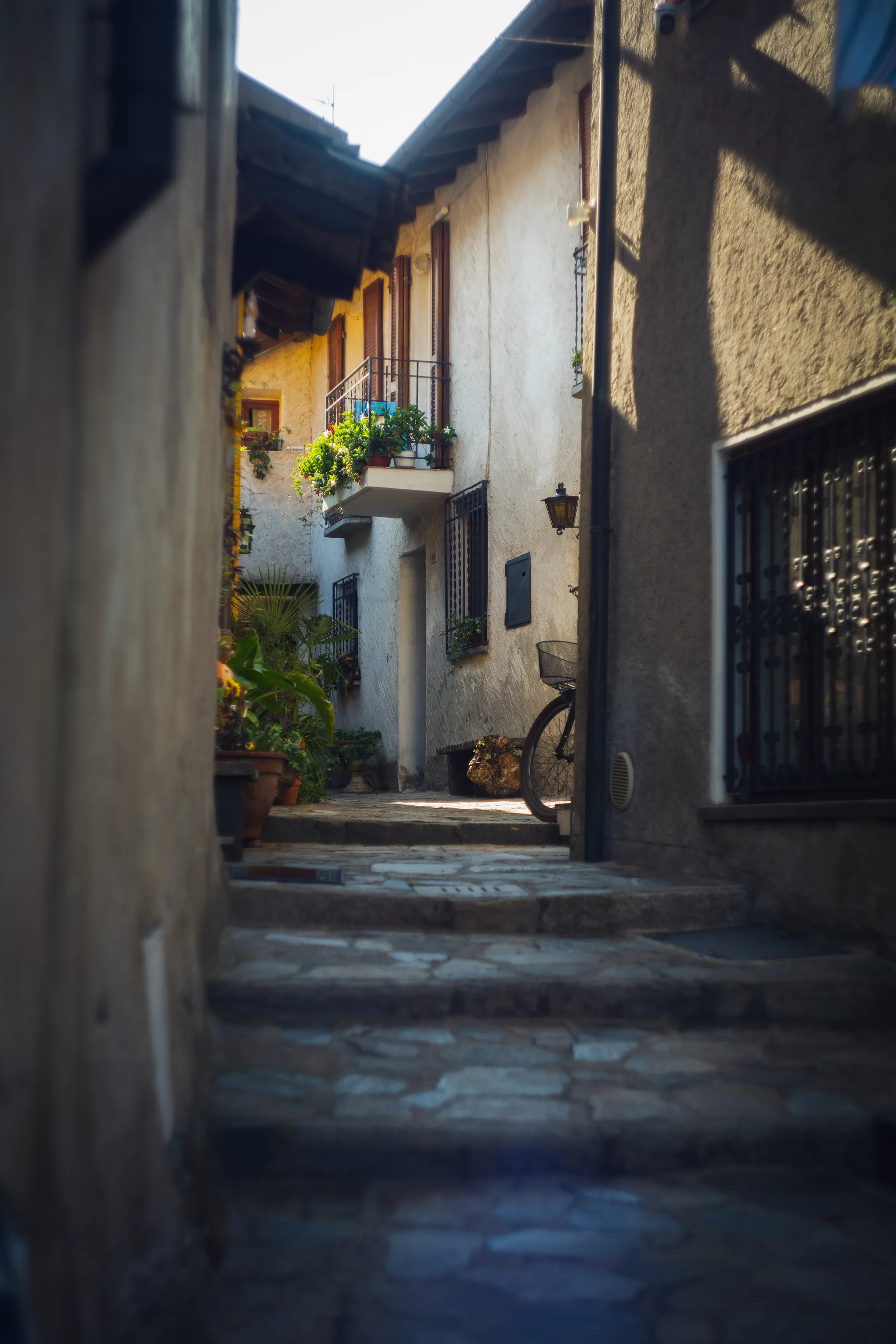
Cannobio itself is a knot of lanes stacked up behind the lakefront. The Palazzo della Ragione, the "Parasio" to locals, dates from 1291, when the town still ran its own affairs. On the waterfront, the Santuario della Pietà marks the spot where, in 1522, a painting of the Pietà is said to have bled in an inn. Every 7 January the town still remembers it with a procession lit by candles and lanterns.
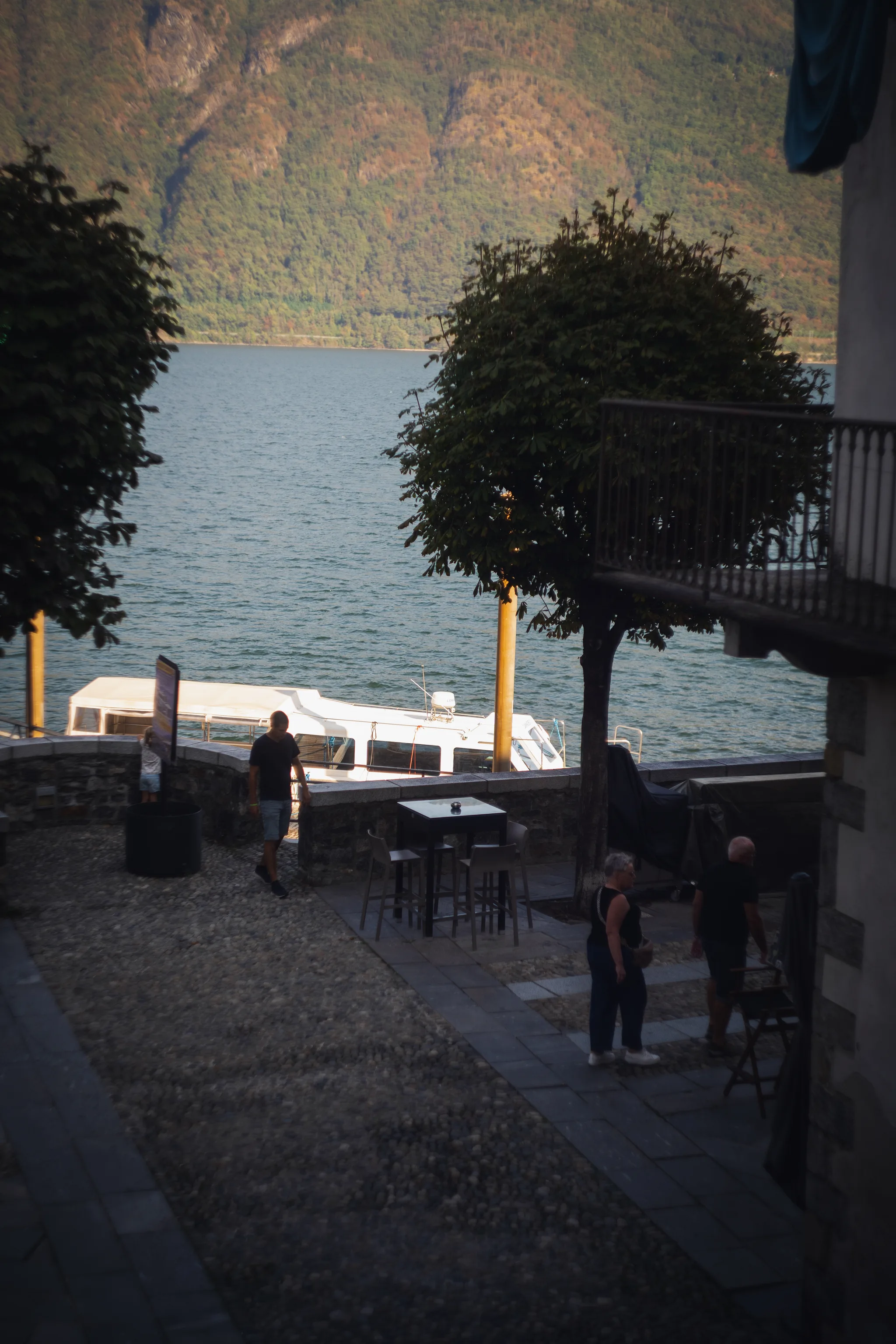
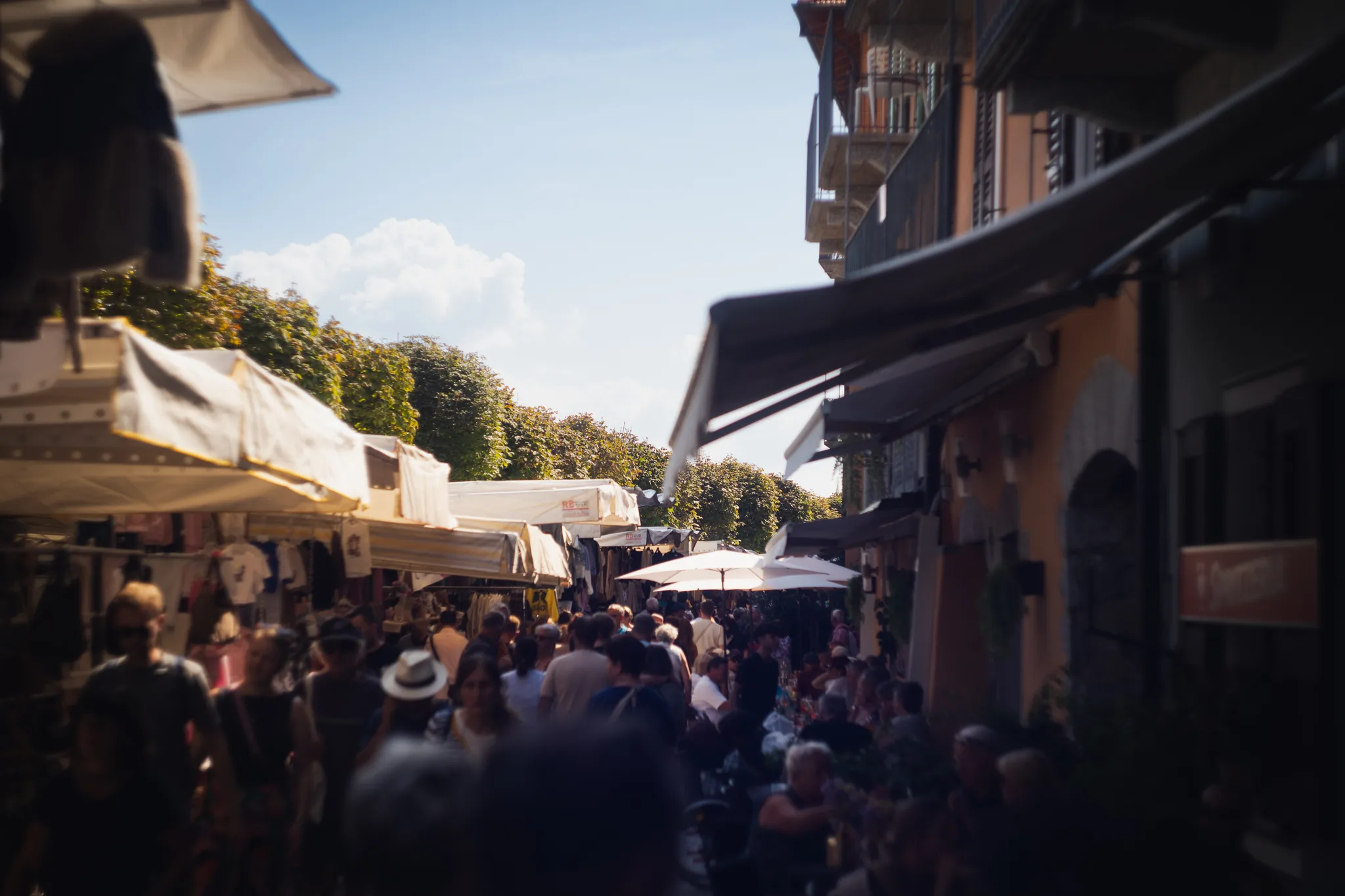
On Sundays the whole lakefront turns into a market: clothes, cheese, salami, and a good part of Ticino on a day trip.
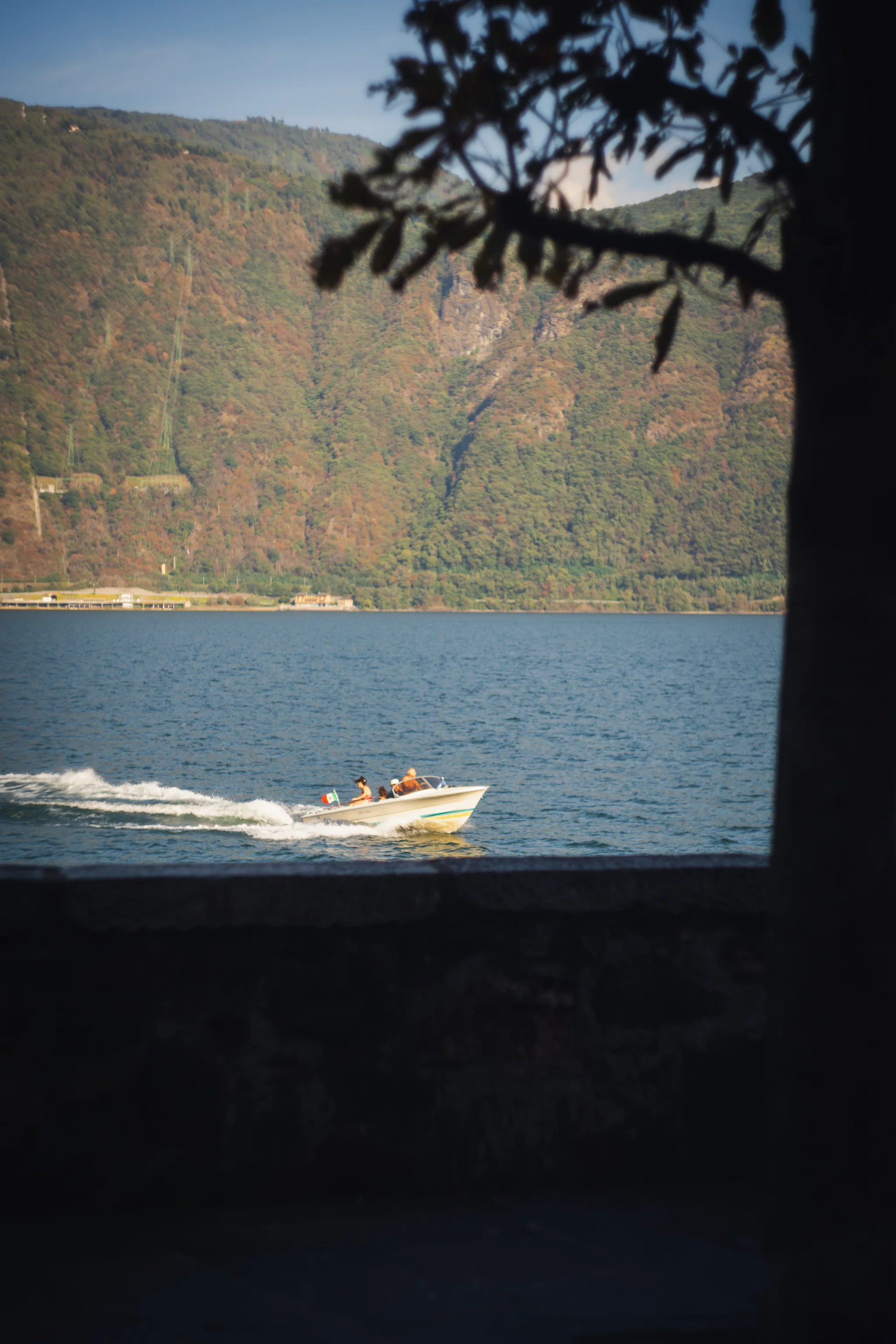
A few kilometres south, two rocky islets off Cannero hold the ruins of the Malpaga, where the five Mazzarditi brothers ran a pirate business on the lake in the early 1400s until the Visconti of Milan starved them out. The Borromeo built the Rocca Vitaliana on the ruins from 1519. Behind Cannobio, the Valle Cannobina climbs into the mountains, with the Orrido di Sant'Anna, a narrow gorge cut by the Cannobino, just up the valley.